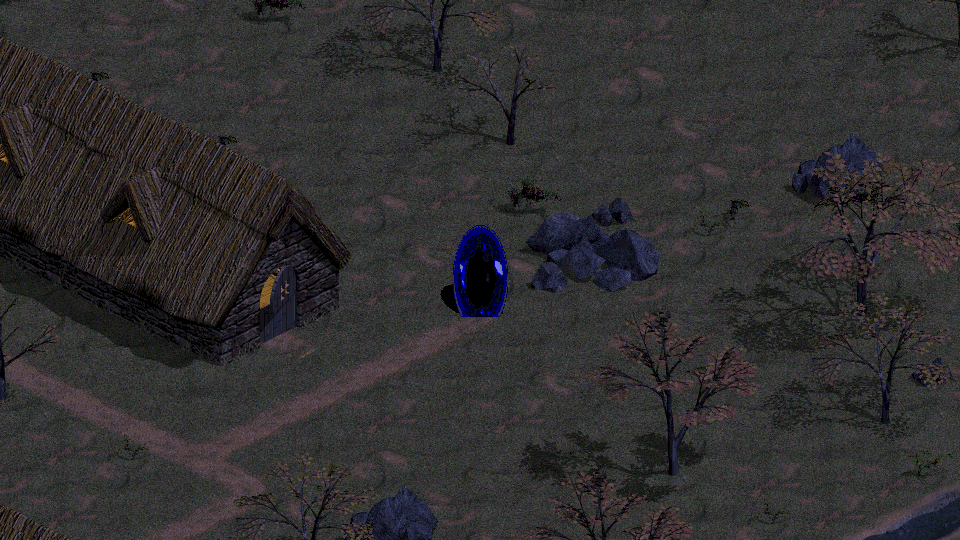
I don’t remember if I finished Diablo back in the day or if I learned the rest of it through cultural osmosis. I certainly did now. Regardless, I had forgotten how many genre staples were already present.
It’s not just procedural generation, two vessels for health and mana, clicky combat, etc. There are fully voiced quests, a reasonably robust loot system, spells and scrolls, and many other features that have become standard not just for this type of action RPG, but for most games nowadays. Yes, a lot of games are Diablo-clones now.
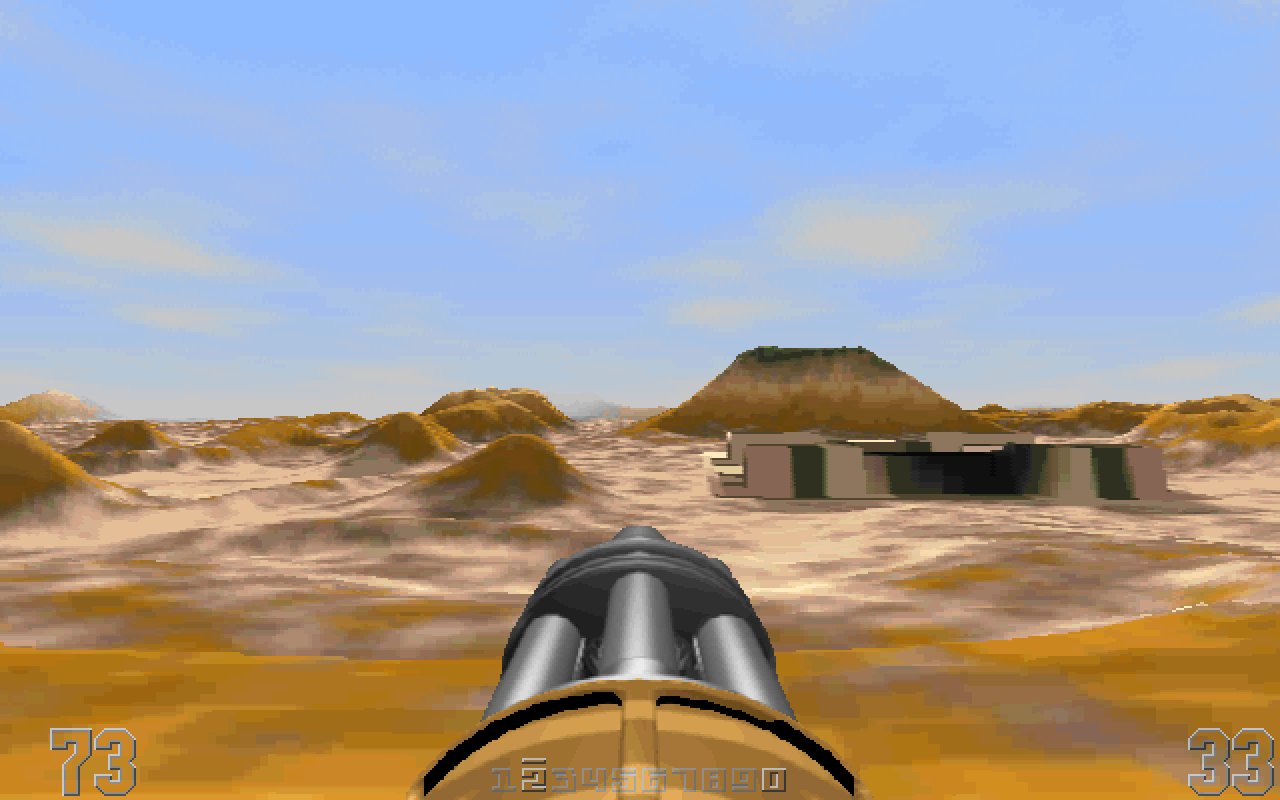
What sets Z.A.R. apart from other shooters is its open levels and voxel engine. Are these features enough to make it a hidden gem? Not really. It’s not a bad game and is still enjoyable, just not very remarkable.
I can’t help but think that Babylon 5: The Road Home wasn’t created because someone wanted to tell a story. Perhaps they just wanted to revisit some aspects of the TV show. Perhaps they wanted to gauge interest in an old, dormant franchise. It feels like a postcard — a way to remember something. But it’s certainly a nice postcard.
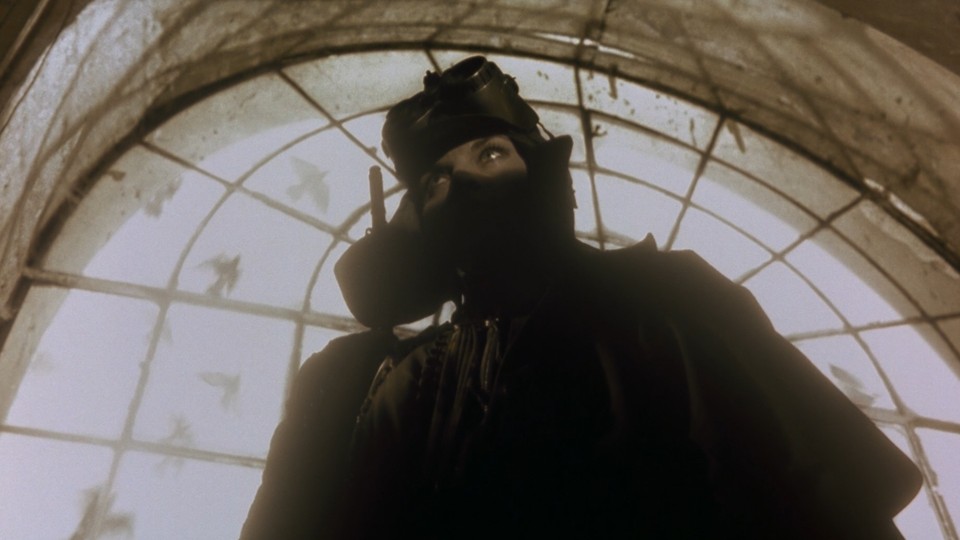
Avalon is beautiful, in that drab sort of way. Even the CGI, which often ages first, looks interesting because of its style. The story has been done before, though. That’s not necessarily a bad thing; there’s no reason to expect everything to be unique. It’s just that Mamoru Oshii keeps playing with similar ideas, and this is not his best work.
I don’t want to overuse the word “beautiful”, so I’ll only say it once: Kena: Bridge of Spirits is beautiful. The story, art style, music. I have some complaints about the combat, but the exploration and puzzles are very good. It’s a dark fairy tale, but there’s nothing particularly worth warning about.
Someone described Adaca as a game similar to S.T.A.L.K.E.R., and I can see that. However, the main campaign is more or less Half-Life 2. It’s a reasonably straightforward, linear shooter with a gravity gun from the get go. It’s solid.
Also, as far as I can tell, this is the first game with an explicitly non-binary character, which is great.
Can a character escape his past? Can a game series?
God of War started as a series based on the ideas of what is cool from “a teenager’s notebook”. Now, it wants to do better. It’s great to have all the new progressive titles, but I have to admit that it’s also valuable for an old and popular franchise to pull something like this off.
Does it? Norse era games — God of War and God of War Ragnarök — are far from ideal, but they’ve come a long way from their questionable roots. They would have been extremely progressive if released 20 years ago. Today? Even without spoilers, I can point out a couple of things where someone should have raised their hand and asked, “are we sure we want to do this?”
Overall, I enjoyed playing them, despite some minor gripes. I mostly didn’t care about combat, which might be my issue. I liked the combat in Doom: The Dark Ages quite a lot, but I haven’t liked the combat in any game since then. For me, running around in a not-so-open world, solving puzzles, and listening to NPCs was way more enjoyable. Thank goodness for a modern approach to difficulty that lets you breeze through encounters and most boss fights if you so desire.
Speaking of combat I didn’t care about… South of Midnight is a great game! It’s a dark fairy tale. Emphasis on dark: expect serious subjects to be brought up. It’s also going to get political, for sure! But it also has plenty of whimsy, have interesting characters and stories, looks great, and is an outright musical, with lyrics that help tell the story.
Speaking of musicals… Mayor May Knott is a horror-themed game in which you rebuild a small town, and has a lot of original parody songs. To be fair, most of the game consists of busywork and light puzzles, and its performance is dreadful on any machine I have. However, the theme, quirky characters, and overall feel-good-ness, that I liked since I played the demo, pulled me through. You’re giving people homes, c’mon! No regrets!
In Shadow Man: Remastered, the world itself is the main hero. It is hellishly confusing, but extremely satisfying to figure out. Even with the addition of higher-resolution textures, it remains vague, which works in its favour: your imagination does the work. It’s colourful, yet dark and moody. While not wholly unique — we’ve seen similar examples of the combination of natural and mechanical elements in the depiction of otherworldly places — it still has its own style. It’s great!
Mechanically, the game is a 3D Metroid-like, which, given how rare those are, deserves some attention in its own right. And it’s a good one, provided you can tolerate its very hands-off approach. By that, I mean that it doesn’t provide any guidance beyond the bare minimum. The remastered version rectifies this to some extent by providing a lot more information than the original. I think not knowing where to go is one of the worst feelings in a video game. So why am I tolerating it here? Honestly, I have no idea.
I tried a non-remastered version, but I didn’t get very far. I think it’s fine, but there’s no reason to play it at this point. You won’t miss anything by playing the remastered version, and the quality-of-life improvements and restored content are very nice.
Right, the elephant in the room. It’s a character created by white people. It’s a game created by white people. One of the two black characters is voiced by a white actor. The culture they depict is clearly not their own. Problematic? Of course! More than that? It’s not for me to judge, but personally, I didn’t find it egregious.
Doom: The Dark Ages is basically a fantasy game now. Starting with
Doom (2016), this iteration of the series has been playing with the fantasy/sci-fi duality established by the original
Doom (1993) and has gradually leaned more towards fantasy. In fact, I can’t help but think of it as a fast-paced, first-person spell-slinging game rather than a shooter. It still abbreviates to FPS :)
I also can’t help but think how this series in a conversation with Metroid Prime games. They start on different sides. The Prime games are open world, and the Doom games are linear. But they meet somewhere in the middle, where exploring the world is tremendously satisfying.
The fact that the latest games in both series have more story, cutscenes, and NPCs is also very funny.
Froggy Hates Snow has a very satisfying snow-clearing mechanic, and sometimes, that’s all you need.
I was somewhat disappointed with Keeper. It’s a neat looking puzzle game with a number of turns, so to speak, but ultimately, I didn’t care about its story. That story also felt stuck between being very vague (there isn’t a single word spoken throughout) and a fully-fledged one. Not bad, just not for me.